

Gratitude isn’t just a seasonal gesture—it’s a value that transforms relationships, team dynamics, and organizational culture. While Thanksgiving season often reminds us to “give thanks,” leaders who practice gratitude every day model a deeper truth: recognition and appreciation are not just soft skills.
At WISL, we believe gratitude as a leadership practice is about creating a culture rooted in awareness, humility, and connection.
Take a Moment to Think About Gratitude
Pause for a moment. Think about a time someone genuinely thanked you, not out of habit, but because you made a difference.

How did it feel?
Gratitude has a way of landing softly yet powerfully. It validates effort. It reminds us that what we do matters. And when we express gratitude to others, it shifts our focus and energy outwards.
Taking even a few minutes each day to notice what you’re grateful for changes how you show up. It slows the pace, sharpens awareness, and creates room for empathy (WISL, 2025).
As leaders, that pause matters. It moves us from reacting to reflecting. Gratitude helps people feel appreciated, and beyond that, gratitude actually transforms communities and wellbeing.
The Science of Gratitude
Modern research has caught up to what many servant leaders have long understood: gratitude transforms people and systems.
- Positive psychology research from Emmons and McCullough (2003) found that people who regularly record things they’re thankful for experience greater optimism, stronger immune systems, and satisfaction with life.
- Neuroscience studies (Fox et al., 2015, University of Southern California) show that expressing gratitude activates brain regions linked to moral cognition, empathy, and reward, literally reinforcing the neural pathways for kindness and trust.
- A 2021 study published in The Journal of Happiness Studies examined the impact of writing gratitude letters and making gratitude visits among graduate students. Participants who engaged in these intentional gratitude practices reported significant increases in happiness, overall well-being, and the sense of meaning in their relationships (Kazemi & Besharat, 2021).
Gratitude, in this sense, is not just a soft skill. It’s an invaluable advantage that increases trust across teams. This is where servant leadership steps in.
Gratitude & Servant Leadership
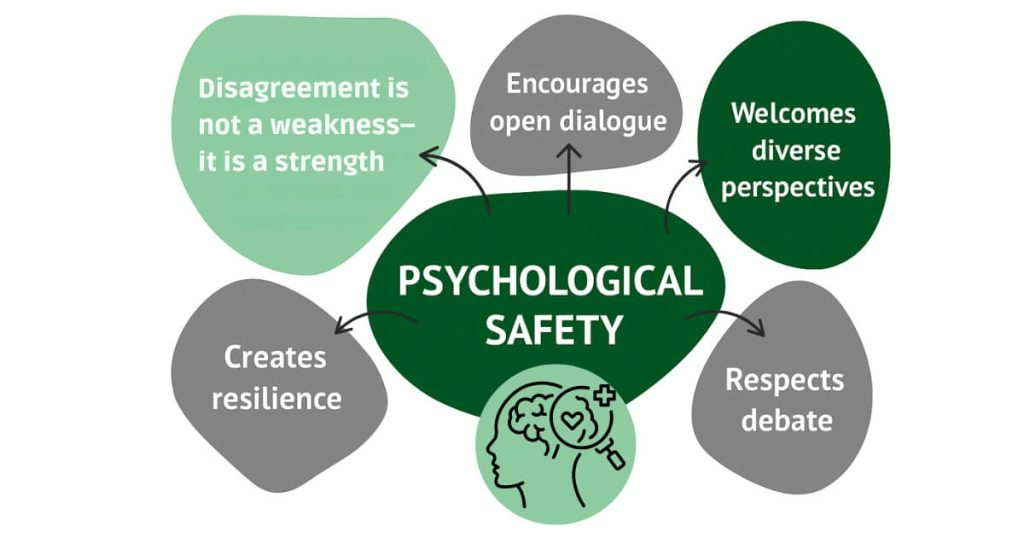
Servant leadership is rooted in empathy, stewardship, and the growth of others. When leaders intentionally express appreciation, they affirm the worth and contributions of their peers. This cultivates psychological safety (WISL, 2025), the foundation of innovative and compassionate workplaces.
Servant leaders who lead with gratitude demonstrate:
- Empathy, by seeing others’ efforts and struggles.
- Stewardship, by acknowledging interdependence and shared purpose.
- Growth orientation, by celebrating progress, not perfection.
Gratitude transforms leadership from a position of power into a practice of partnership.
Practical Ways to Lead with Gratitude
If you are wondering how you can implement more gratitude in your daily habits, here are a few ways to do that:
- Start with awareness. Take time to notice what’s working well before addressing what’s not. The whole point of gratitude is to be thankful — even for the small things.
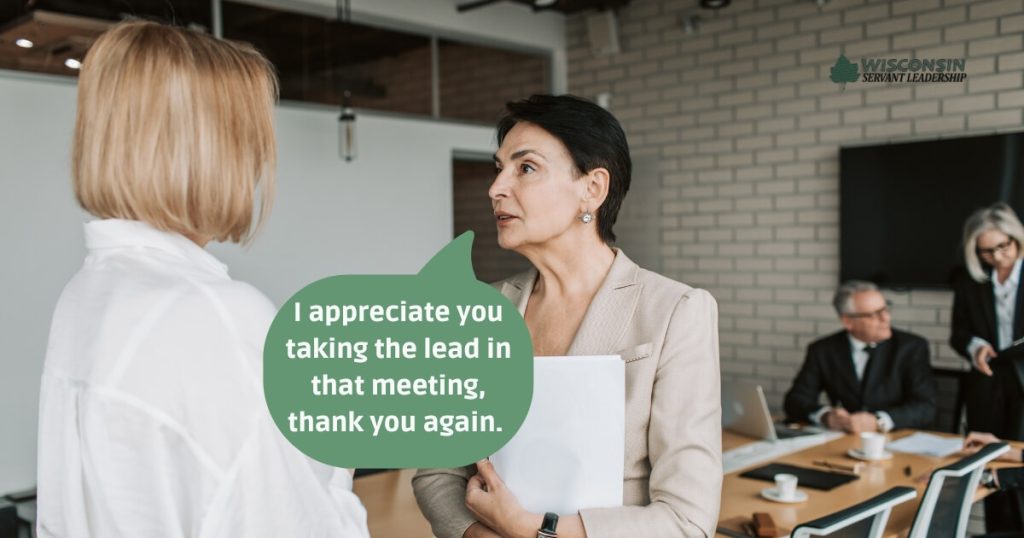
- Be specific. Replace generic praise (“Good job”) with details that show you truly see someone’s effort. Ex: “Your explanation in that meeting helped us move forward with clarity”.
- Create gratitude habits. Begin team meetings with a quick moment to recognize contributions or progress. Or find other small habits that can be implemented between peers.
- Model humility. Acknowledge the help, feedback, or patience of others in your own growth. Also, know when there are mistakes or wrongdoings on your own accord.
- Encourage peer appreciation. Build channels for team members to celebrate one another’s wins, or create time for appreciation to be openly shared.
Gratitude doesn’t require grand gestures — it thrives in small, genuine moments of recognition that multiply trust over time (WISL, 2025).

Gratitude as a Multiplier
In servant leadership, gratitude doesn’t simply make people feel good; it makes organizations work better.
When leaders lead with gratitude, communication opens, collaboration deepens, and well-being improves.

Interested in having meaningful conversations like this one? We would be grateful if you would join us at a future WISL Roundtable!
References
Emmons, R. A., & McCullough, M. E. (2003). Counting blessings versus burdens: An experimental investigation of gratitude and subjective well-being in daily life. Journal of Personality and Social Psychology, 84(2), 377–389. https://doi.org/10.1037/0022-3514.84.2.377
Fox, G. R., Kaplan, J., Damasio, H., & Damasio, A. (2015). Neural correlates of gratitude. Frontiers in Psychology, 6. https://doi.org/10.3389/fpsyg.2015.01491
Stefan, D., Lefdahl-Davis, E., Alayan, A., Decker, M., Wittwer, J., Kulwicki, T., & Parsell, J. (2021). The impact of gratitude letters and visits on relationships, happiness, well-being, and meaning of graduate students. Journal of Positive School Psychology, 5(2), 110–126. https://doi.org/10.47602/jpsp.v5i2.256
Wisl. (2025a, September 2). How to be a good leader through listening and empathy. Wisconsin Servant Leadership. https://wisconsinservantleadership.org/how-to-be-a-good-leader-through-listening-empathy/
Wisl. (2025b, September 2). The role of servant leadership in community building. Wisconsin Servant Leadership. https://wisconsinservantleadership.org/role-of-servant-leadership-in-community-building/
Wisl. (2025c, September 2). Tips to Build Trust & Collaboration Through Servant Leadership. Wisconsin Servant Leadership. https://wisconsinservantleadership.org/tips-to-build-trust-and-collaboration-servant-leadership/
Wisl. (2025d, September 9). Community service helps, servant leadership heals. Wisconsin Servant Leadership. https://wisconsinservantleadership.org/community-service-helps-servant-leadership-heals-differences/
Wisl. (2025e, September 9). Why humility is a superpower for modern leaders. Wisconsin Servant Leadership. https://wisconsinservantleadership.org/why-humility-is-a-superpower-for-modern-leaders/